

SPONSORED
The CBN Said Yes to Crypto. Here Is What That Actually Means for Ordinary Nigerians
By Monica.Cash | Mbah Casmir, Founder and CEO

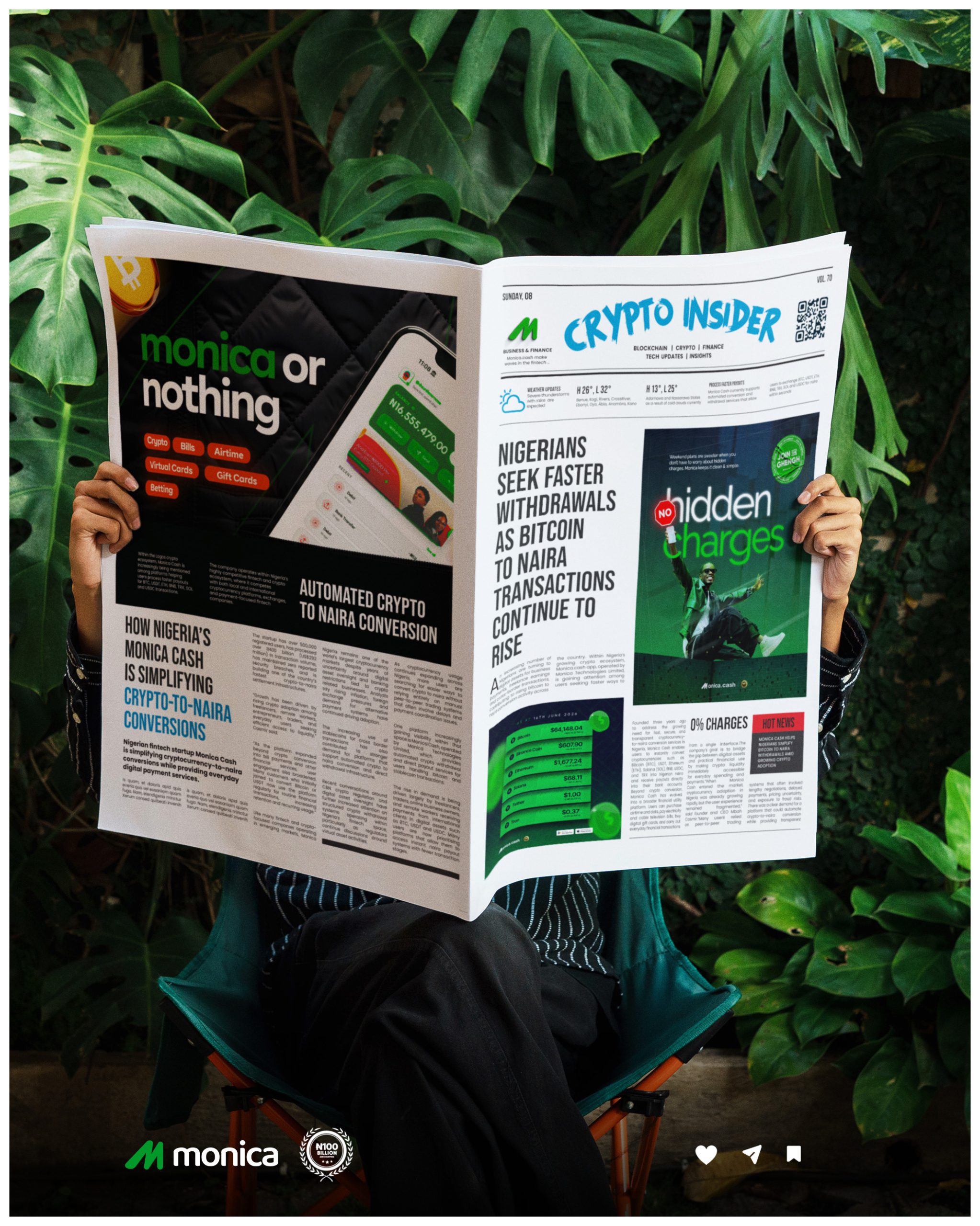
Over the past few years, few topics in Nigeria’s financial sector have generated as much confusion as cryptocurrency regulation.
Many Nigerians remember when banks stopped facilitating transactions involving cryptocurrency. Others remember the headlines about restrictions, warnings, and regulatory uncertainty. Then came another round of headlines suggesting that the government had changed its position and that cryptocurrency was now allowed again.
For many ordinary Nigerians, the result has been confusion rather than clarity.
Many people are still unsure about what the recent policy changes actually mean in practice. Some assume cryptocurrency has been fully approved. Others believe the restrictions remain exactly as they were before. The reality sits somewhere in between, and understanding that distinction is important for anyone participating in Nigeria’s growing digital asset economy.
The first thing to understand is that the Central Bank of Nigeria did not suddenly approve cryptocurrency in the way many people assume. What changed was the regulatory approach.
In late 2023, the CBN lifted restrictions that had previously prevented banks from providing services to virtual asset service providers. This was a significant shift because it acknowledged a reality that had already become difficult to ignore. Cryptocurrency activity continued to grow despite the restrictions, and regulators increasingly recognised that a more structured framework would be more effective than attempting to isolate the sector from the financial system.
Rather than focusing primarily on restrictions, the conversation began shifting toward supervision, compliance, accountability, and consumer protection.
That shift became even clearer as the Securities and Exchange Commission introduced new regulatory pathways for digital asset operators and Nigeria’s legal framework began providing greater recognition for digital assets. The focus moved away from whether digital assets should exist and toward how they should operate responsibly within the financial ecosystem. And for ordinary Nigerians, this is where the policy changes become relevant.
The recent regulatory developments do not mean that cryptocurrency has become risk-free. They do not mean that every crypto platform is automatically approved. They also do not mean that regulators have stepped away from oversight. What they signal is the emergence of a more structured environment where digital asset businesses are expected to meet compliance standards and operate with greater transparency.
This distinction is particularly important because cryptocurrency usage in Nigeria has evolved significantly over the years.
Many users are no longer interacting with digital assets out of curiosity. They are using them to receive international payments, preserve value, support business transactions, and access global financial opportunities. As adoption has expanded, the need for stronger safeguards and clearer rules has become increasingly important.
Conversations around customer expectations at Monica.Cash, including ongoing discussions with COO Chinazam Umezinwa, consistently point to a common trend. Users increasingly want clarity around how platforms operate, how funds are handled, what protections exist, and whether the businesses they engage with are committed to regulatory compliance.
That demand for transparency is healthy for the industry because it encourages higher standards across the market.
For years, uncertainty created an environment where many users struggled to distinguish between responsible operators and opportunistic players. As regulation becomes clearer, consumers are becoming better equipped to make informed decisions about where they transact and whom they trust.
At the same time, it is important to recognise that digital asset regulation remains a developing area not only in Nigeria but across the world. Technology continues to evolve rapidly, new financial products emerge regularly, and regulators globally are still refining approaches that encourage innovation while protecting consumers.
For users, legality is only one part of the conversation. Equally important is understanding whether a platform operates transparently, complies with regulatory expectations, and has built systems designed to protect customers.
Read also: Monica Cash helps Nigerians simplify bitcoin to naira withdrawals amid growing crypto adoption
This is one of the reasons trust is becoming increasingly valuable within the digital asset sector.
Discussions around market behaviour with Barr. Prince Kalu, Chief Compliance Officer of Monica.Cash, frequently highlights how user expectations have changed. People are becoming more selective about where they transact. Increasingly, they are looking beyond convenience and asking whether a platform has the operational standards, compliance culture, and long-term credibility necessary to earn their confidence.
As a regulated platform, Monica.Cash operates within this framework so our users do not have to navigate it alone. The objective is not simply to provide access to digital assets but to ensure that individuals and businesses can access those services through a platform built around compliance, transparency, security, and responsible operations.
For Nigerians, the recent regulatory shift means cryptocurrency is moving into a more structured and accountable environment. It does not mean every platform is automatically approved, and it does not mean all risks have disappeared. What it does mean is that regulators are increasingly focused on creating clearer rules for how digital asset businesses operate and how consumers are protected.
In practical terms, Nigerians can now pay closer attention to whether a platform prioritises compliance, transparency, security, and responsible operations rather than simply offering access to digital assets. As the regulatory framework continues to mature, trust and accountability will become key indicators of which platforms are positioned for the long term.
That is what the CBN and SEC policy shift ultimately means for ordinary Nigerians: greater clarity, stronger oversight, and a digital asset ecosystem that is gradually becoming more structured than it was only a few years ago.
Monica.Cash is a cryptocurrency-to-naira exchange platform helping individuals and businesses across Nigeria convert digital assets seamlessly, with a focus on fast transactions, secure processing, and accessible digital finance solutions.




















1,178 Comments